

The rise of short-form messaging has created a world where a three-letter phrase can stop a conversation cold. That is exactly what is happening with tmp meaning in text. People see it in chats, email drafts, workplace threads, and social posts, then pause for a second because the meaning is not instantly obvious. In a digital culture built on speed, that tiny pause matters. It can change the tone of a reply, shape a first impression, and even decide whether a message feels casual, technical, or confusing.
That is why tmp meaning in text has started drawing attention far beyond slang lovers and language nerds. Parents notice it in their kids’ messages. Workers see it in team chats. Students spot it in notes and shared documents. The phrase feels simple, but the reality is more layered. Unlike fixed texting shorthand such as LOL or BRB, TMP is far more context-driven. That uncertainty is part of the reason it is suddenly trending across search engines and social conversations in the United States.
What TMP Usually Means in a Message
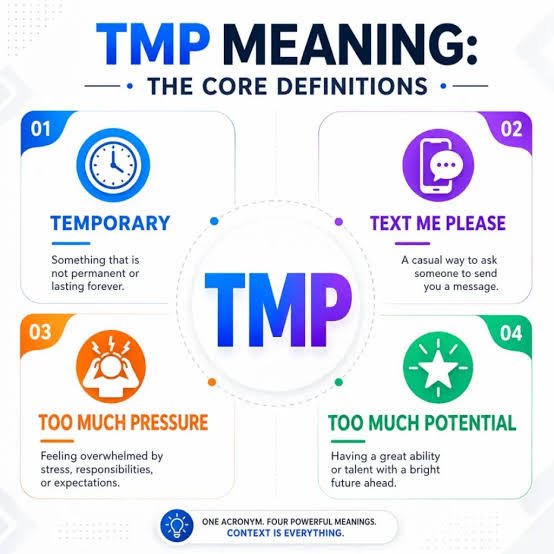
When people look up tmp meaning in text, they are often expecting one clean answer. In reality, TMP is one of those abbreviations that depends heavily on where it appears. In many cases, it is not a classic texting acronym at all. It may be used as shorthand for temporary in project notes, file names, or work-related chats. It can also show up as part of a draft, a placeholder, or a technical label rather than a social expression.
That is why the safest reading of tmp meaning in text is to treat it as flexible, not fixed. If TMP appears in a casual conversation, the surrounding words matter more than the letters themselves. A message about an event, a schedule, or a document may point to a temporary status. A random use in a chat may simply be a typo, an inside joke, or a shorthand that only makes sense to the sender. In modern messaging language, context is the real translator.
Why People Keep Searching TMP Meaning in Text
The search volume around tmp meaning in text reflects a bigger story about how people communicate now. Texting has become the default way to coordinate, react, confirm, cancel, and flirt. Yet the language inside those messages is still changing fast. New abbreviations rise, fade, and reappear with different meanings. That makes users more cautious than they used to be. Nobody wants to misread a message, especially when one unclear abbreviation can shift the mood of an entire exchange.
There is also a trust factor at play. In a workplace chat, tmp meaning in text might look technical or routine. In a personal chat, it could feel strangely cold or cryptic. People search because they want certainty before they reply. That is a smart instinct. Digital communication leaves less room for tone than face-to-face conversation, so even a small abbreviation can create confusion. As a result, searches for shorthand terms keep rising, especially among users who want to sound fluent without sounding careless.
The Most Common Places TMP Shows Up
One reason tmp meaning in text is so confusing is that TMP does not live in just one corner of the internet. It shows up across messaging apps, shared files, drafts, work platforms, and school notes. In a Google Doc or a project board, TMP is often easier to understand because the conversation is already structured. In a private chat, the same letters can feel much less certain. That difference matters because digital communication is rarely just about words. It is about setting, audience, and purpose.
TMP can also appear in text because someone is moving quickly. People type on phones, switch apps, and send half-formed thoughts every day. A small abbreviation may be a deliberate shortcut in one message and an accidental typo in another. That is why tmp meaning in text should never be read in isolation. The platform matters. The speaker matters. Even the time of day can matter. A rushed work message at 8 a.m. reads differently from a late-night friend chat.
How TMP Meaning in Text Connects to Modern Slang
The bigger picture behind tmp meaning in text is the explosion of online shorthand. Social media language rewards speed, wit, and compression. Gen Z texting habits, workplace chat culture, and mobile-first communication have all pushed people toward smaller, faster expressions. The result is a language style where abbreviations are not just convenient. They are part of identity. Using the right shorthand can make someone feel current, efficient, and socially aware.
But that same speed creates risk. The more people rely on text abbreviations, the more likely they are to misread one another. That is where tmp meaning in text becomes a useful case study. It shows how modern digital communication is built on layers of context, not just dictionaries. A person who understands messaging shorthand can move more confidently through group chats, DMs, email threads, and workplace platforms. A person who ignores context can easily miss the tone entirely. In that sense, TMP is not just a phrase. It is a reminder of how fast language is evolving.
Common Mistakes People Make When Reading TMP
The biggest mistake with tmp meaning in text is assuming it has only one universal definition. That assumption works for some internet slang, but not here. TMP is too context-sensitive for that. People also make the mistake of treating it like a pure texting acronym when it may actually belong to a technical or organizational setting. That can lead to awkward replies, unnecessary confusion, or overthinking a message that was never meant to be dramatic in the first place.
Another mistake is ignoring tone. A message can be technically correct and still feel off if the abbreviation is interpreted the wrong way. When people see tmp meaning in text, they often jump straight to decoding letters instead of reading the full sentence. The smarter move is simple: slow down, read the surrounding words, and identify the purpose of the message. Is it a note? A reminder? A status update? A private chat? Once you answer that, TMP usually becomes much easier to understand.
What the Future of Texting Language Looks Like
The future of tmp meaning in text is really the future of all digital shorthand. Messaging language will keep getting shorter, faster, and more layered. AI tools, auto-suggestions, and cross-platform communication will probably make some abbreviations less common, but they will also create new forms of shorthand. People will keep inventing quick ways to say more with less. That means the next wave of text slang will likely be even more dependent on context, group culture, and platform habits.
There is a strong chance that tmp meaning in text will stay relevant simply because ambiguous shorthand is part of how internet language works. Not every term becomes mainstream. Some remain niche, technical, or temporary by nature. That is what makes them useful to search and study. The smart reader in 2026 and beyond will not just memorize abbreviations. They will learn how to interpret them. And that is the real lesson here: in texting, meaning is rarely just in the letters. It is in the moment, the person, and the conversation around it.
TMP meaning in text may look small, but it reflects a much bigger shift in how people speak online. The next time you see it, do not rush to guess. Read the context, check the tone, and let the conversation tell the story before you reply.
You may also read
https://docs.google.com/document/d/1mz6TeXEFW0mKKkzi97atwKIq1VrMXgCMhYaxppZWWK0/edit?usp=sharing