
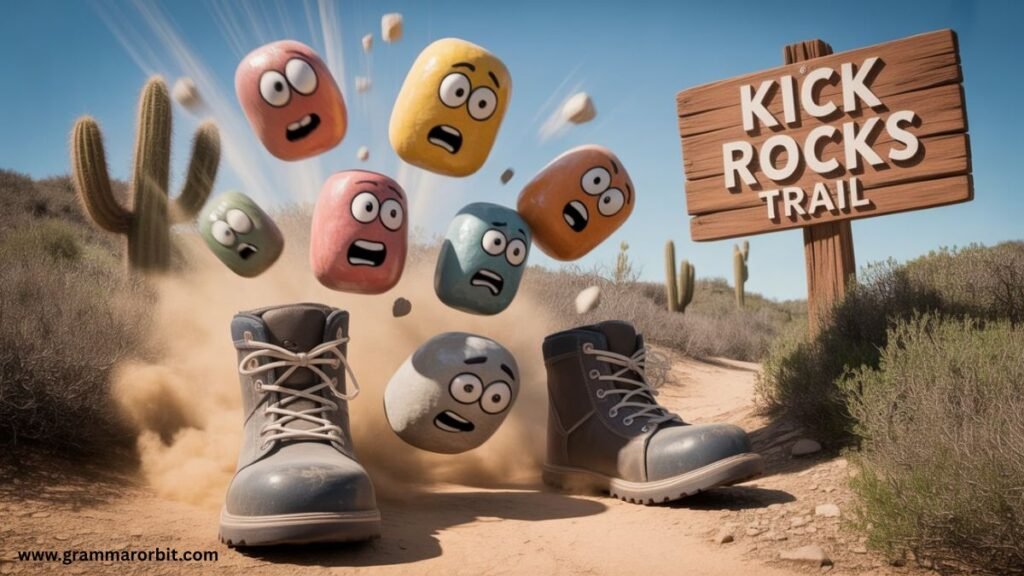

The phrase may sound playful at first, but the real force behind it is far from soft. People keep asking about kick rocks meaning because it shows up in texts, comments, and casual conversations when someone wants to shut a conversation down fast. It is not a polished expression. It carries attitude, frustration, and a clear message: move along. That is exactly why it grabs attention so quickly. In the age of short replies and blunt online culture, phrases like this spread because they say a lot with very few words.
At its core, kick rocks meaning points to dismissal. It is a rude comeback, but it is usually less intense than profanity and more cutting than a simple “leave me alone.” In American slang, it sits inside the same family as “get lost,” “beat it,” and “take a hike,” but it feels sharper because of the imagery. You can almost hear the irritation behind it. That is also why people remember it. It sounds casual, but it lands like a verbal door slam.
Why people are suddenly searching for kick rocks meaning
The phrase is not new, but online culture has pushed it back into the spotlight. Many people first notice kick rocks meaning when they see it in a comment thread, a meme, or a viral clip where someone wants to reject an idea without starting a long argument. Social media has a way of reviving old slang and giving it new life. A phrase that once lived mostly in spoken American English can suddenly become part of everyday digital conversation.
That comeback matters because people now use language differently. Short-form platforms reward quick wit, sharp comebacks, and memorable wording. When a phrase sounds both funny and dismissive, it often spreads fast. Kick rocks meaning fits that pattern perfectly. It is easy to understand once explained, but it also feels bold enough to use in a moment of tension. That balance helps it travel from private chats to public feeds, where it gets repeated, remixed, and reinterpreted.
The tone behind kick rocks meaning and when it lands hardest
Tone is everything with this expression. Kick rocks meaning is rarely neutral. It is usually said when someone is annoyed, fed up, or done entertaining nonsense. The phrase can sound joking among friends, but it can also sound cold if the mood is serious. That flexibility makes it powerful. Depending on the speaker, it can come off as playful sarcasm or a firm verbal boundary. Context decides whether it feels light or harsh.
That is also why the phrase has staying power. People like expressions that carry emotional weight without needing a long explanation. In that sense, kick rocks meaning works like a shortcut to frustration. It communicates, “I am not interested,” or “You are wasting my time,” without spelling out every detail. In fast conversations, especially online, that efficiency matters. The phrase feels modern even though its roots are older than today’s apps and feeds.
Kick rocks meaning compared with other slang phrases
To understand kick rocks meaning, it helps to compare it with other familiar American expressions. “Get lost” sounds direct. “Leave me alone” sounds personal. “Take a hike” feels old-school and slightly humorous. Kick rocks sits somewhere between all of them, with a tone that is both dismissive and visual. The phrase creates an image of someone being sent off in a pointless direction, which makes the insult feel clever instead of plain.
That cleverness is part of why the phrase survives in conversations. People often prefer slang that sounds sharp but not overly complicated. In modern American slang, a line that feels memorable can spread much faster than a long explanation. Kick rocks meaning has exactly that kind of advantage. It is short, expressive, and easy to repeat. Once someone hears it, they usually understand the message even if they have never used it themselves.
How kick rocks meaning shows up in real conversations
In daily life, people usually say this phrase when they want distance. It can appear during arguments, after a rude comment, or when somebody is clearly over a conversation. For example, a person might use it after repeated pressure from someone who will not take no for an answer. In that moment, kick rocks meaning becomes less about style and more about boundaries. It is a verbal signal that the conversation is over.
Online, the phrase often appears in a more performative way. A post might use it as a punchy caption or as a reply to a comment that feels arrogant, annoying, or unwanted. That is one reason the term keeps surfacing in search trends. People are not just trying to decode the words; they want to know the feeling behind them. The expression has become a piece of social media slang that carries both humor and rejection in a single line.
The cultural appeal of kick rocks meaning in 2026
Part of the appeal is that the phrase feels human. It is blunt without being overly technical, and it sounds like something a real person would say in the heat of the moment. In a digital world packed with polished content, that roughness stands out. Kick rocks meaning resonates because it reflects how people actually speak when patience runs out. It sounds immediate, emotional, and unfiltered, which gives it a strong presence in modern conversation.
There is also a storytelling element to the phrase. It suggests motion, distance, and dismissal all at once. That makes it more memorable than a flat insult. People remember lines that paint a picture. In this case, the image is simple: someone is being sent away, and they are not being invited back. That visual quality helps kick rocks meaning remain relevant across text messages, comment sections, and casual speech in the United States.
What to remember before using kick rocks meaning yourself
The biggest thing to remember is that this is not a polite phrase. Even when it sounds funny, it can still offend people if the timing is wrong. Kick rocks meaning is best understood as a dismissive slang expression with attitude. It can work in friendly banter, but it should be used carefully because tone changes everything. What sounds clever to one person may sound disrespectful to another, especially in serious conversations.
Still, the phrase remains popular because it captures a very common feeling: being done with nonsense. That is why people keep searching for kick rocks meaning and why it continues to show up in American slang discussions. It is short, vivid, and easy to remember. If you hear it again in a meme, a reply, or a conversation, you will know exactly what it means and why it hits so hard. Keep an eye on phrases like this, because they reveal how fast modern language moves and how strongly people still value a sharp, unforgettable comeback.
You may also read
https://docs.google.com/document/d/1wDKiNAQhj1K_hEj-ydo4huv8q1M6aOG8qWIuXHUWsNA/edit?usp=sharing